
Water Heaters
Here's What You Need To Know Before Upgrading and Installing A New Water Heater
Everything You Need To Know About These Necessary Devices
Since its invention 150 years ago, the common water heater has undergone many changes and technological breakthroughs — from a simple, but sometimes hazardous, device that heated water as it poured into a bathtub, to today’s miniature marvels that utilize a variety of advanced heating sources to give us the hot water that modern households often take for granted.
With over 14 years in the plumbing business, Robins Plumbing, Inc. is Phoenix’s local expert on selection, implementation, and installation of all styles of water heaters. No matter the circumstances, we can get your new water heater up and running with professionalism, expediency, and courtesy. Please let us know if we can help you!
Do you have the space required for a new water heater?
If you already have a standard electric- or gas-powered water heater in your home, then chances are good that you already have the space to accommodate either a standard water heater or one of the more advanced units that are available in today’s market. There are so many makes and models being made that you shouldn’t have a problem finding one that will fit whatever space you may have set aside for it.
What if you have limited space to work with? Fortunately, there are models available that will fit in almost any area. Short water heaters (also called lowboys) are quite convenient for tight spaces such as underneath stairs or inside cabinets. You also have the option of buying a tankless water heater, which takes up much less space than traditional water heaters.
Regardless of your situation, make sure to measure the area in which you’re planning on installing your new water heater. You don’t want to be caught off guard at the last minute and forced to make room with a sledgehammer!
What fuel source will you need to take into consideration?
The vast majority of residential water heaters run on gas or electricity for their fuel source. If you are replacing an existing gas-powered water heater, confirm that it uses propane or natural gas and shop accordingly.
If you are looking to switch to an electric water heater and are currently running a gas-powered unit, there are conversion kits available that will allow you to implement an electric water heater. You’ll want to hire an experienced plumbing service like Robins Plumbing, Inc. to install a conversion kit for your new system; we have the experience to do the job correctly and ensure everything runs safely and efficiently.
Solar water heaters are another matter entirely — you’ll have to make room for solar panels on the roof, the pipes that carry water between the panels and the heater itself, and a heat exchanger in the case of antifreeze-based models.
How much storage capacity will you require?
Tank water heaters are rated by how many gallons of water they can hold. On-demand (tankless) water heaters don’t hold water, but are instead rated by their “flow capacity” which essentially dictates the amount of hot water the unit creates in a given time and the momentum at which it can be transported throughout your home.
Make sure to take into account how many rooms you need your hot water to flow to and the size of the building where your water heater is to be located — you may find that the best option for your situation is to install two water heaters instead of a single one.
What storage type will you want?
Will a simple tank water heater fit your needs, or are you looking for something else? If capacity is a concern, you’ll definitely want to consider a standard tank water heater, as they can hold a large amount of water that will supply multiple people in a large household for extended periods of time.
On the other hand, if conserving energy is your game, a tankless water heater might be for you. With a tankless system, you can reduce energy consumption by 20% to 30%. The only drawback to a tankless water heater is the somewhat-limited flow rate, which can be a problem for large households where several people may need hot water at the same time.
How energy efficient do you want it to be?
For those with large families, a water heater can be responsible for almost a quarter of the total energy consumed in a home. Older water heaters are especially prone to high costs, but fortunately all new water heaters sold in the United States have a relatively high energy efficiency rating in order to meet federal energy standards.
If you have any questions about water heaters and energy efficiency, Robins Plumbing, Inc. would be glad to answer them! Just let us know right here.

Thanks to modern advances in technology, it’s easier than ever to find a water heater that will fit any lifestyle, location, or situation. If you feel stumped in your search for the perfect water heater, don’t fret! Robins Plumbing, Inc. is here to guide you through your mission, from the very beginning to the very end.
For a detailed description of the various types of water heaters available and their corresponding energy consumption, check out the list below.
Storage Tank Water Heater
Conventional water heaters with tanks are by far the most common type of water heater in use today. As the name implies, they include a tank that stores water to be heated for use. The water is warmed via a gas flame (for gas-powered models) or electric element (for electric-powered models) in the tank itself, which is insulated to keep the water at a predetermined constant temperature. Once the hot water is used up, the tank fills with cold water and the process starts all over again.
The Pros:
-
Low upfront cost
-
Easy to install
-
Can hold between 20 to 80 gallons of water
-
Great for large households
The Cons:
-
High long-term running cost
-
Less efficient than other types of water heaters
-
Bulky and space-wasting
-
Takes time to refill after heavy use
Tankless Water Heater
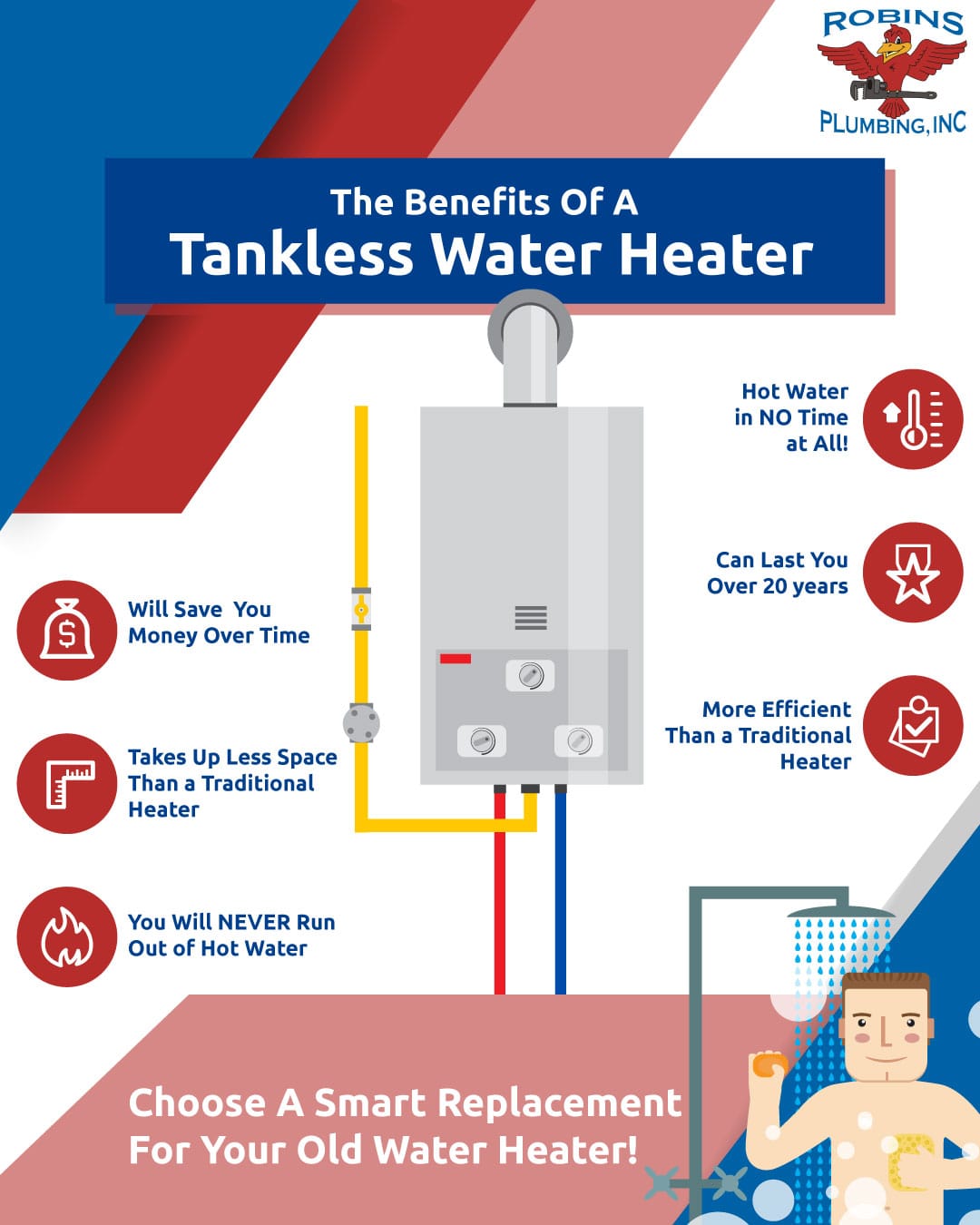
Also called on-demand water heaters, these models use super-heated coils to start warming water as soon as the tap is turned on — although not instantaneous, you will get the hot water you want much more quickly than with a standard water heater. Once the tap is turned off, the heating element shuts down.
Because tankless water heaters can sit idle without using any energy, you can expect savings of up to 34% on your monthly utility bill in the long run. Because of their design, a single tankless heater may not be the best option for larger households, but they do come in a variety of sizes that can be matched to almost any situation, and it is relatively easy to find space for additional units.
The Pros:
-
Low long-term running cost
-
Takes up less space in your house
-
Much more energy efficient
-
Hot water on demand
The Cons:
-
Higher upfront cost
-
May require larger power source
-
Lower water output
-
May not be the best choice for large households
If you live in the Phoenix area and are in the market for a new tankless water heater, Robins Plumbing, Inc. can help you with installation, whether you are looking at a gas or electric heater. For even more information on these devices, contact us here.
Hybrid Water Heater
This style of water heater, also known as a heat pump water heater, doesn’t directly generate heat — instead, it takes heat from the air and ground around the unit and transfers that heat to water stored in a tank. In cases where it cannot draw enough energy through the pump (such as in colder environments), it will switch to electrical components in order to produce hot water.
Because of its components, a hybrid water heater is not optimal for areas that have fluctuating temperatures. For ambient spots like Phoenix, however, a hybrid model can save homeowners up to 60% on their energy bill compared to other types of water heaters.
For more information on hybrid water heaters, please check out our dedicated hybrid page here.
The Pros:
-
Will pay for itself in 2 years
-
Can last 2x as long as a standard tank
-
Better warranty than standard tank
-
Can save up to $4,700 in electricity in the first 10 years
The Cons:
-
High upfront cost
-
Bulky
-
No real cost savings in electrical mode
Solar Powered Water Heater
If your home already uses roof-mounted solar panels, a solar powered water heater can be a very economical upgrade. Drawing energy directly from the sun, this type of water heater is the most energy efficient system to use, especially in sunny climates. However, you’ll need to have a backup plan (such as natural gas or electricity) so the heater can continue to operate during those occasional cloudy days.
For anyone in the Phoenix area that already has a solar panel setup, this type of water heater is the perfect choice!
The Pros:
-
Incredibly energy efficient
-
Environmentally friendly
-
Massive cost-savings over time
The Cons:
-
Very high upfront cost
-
Not optimal for low-sunlight areas
-
Requires a backup energy source
Condensing Water Heater
If your residence is dependent on gas as an energy source, you might be interested in a condensing water heater. This type of water heater works by funneling exhaust from a home’s gas lines into a coil-equipped tank, where it heats the water to an acceptable temperature.
Given the process by which it draws energy, a condensing water heater can be extremely cost-effective. However, keep in mind that this model require a lot of space due to the fact that it requires a relatively large tank (usually around 50 gallons or more).
The Pros:
-
Very energy efficient
-
Uses “leftover” energy as a heating source
-
Great for homes running primarily on gas
The Cons:
-
Not available in smaller models
-
Won’t work without a natural gas source

Let Robins Plumbing, Inc. Help You Choose A New Water Heater
No matter what your needs are, the top-rated plumbers at Robins Plumbing, Inc. can help you in choosing the right water heater for any given situation. In addition to advising you on the best water heater replacement to look for, we can also make any required adjustments to your home if they are needed, such as adding new gas lines or clearing space for a larger model.
Not quite ready to replace that aging water heater in your basement? We can troubleshoot and repair your existing unit if it’s having problems.
Whether you choose a standard electric water heater or decide to go with a more advanced remote-controlled system, Robins Plumbing will be there every step of the way.
We Specialize in All Your Plumbing Needs
Below are just a few of the services we offer.

We are licensed, bonded and insured experts here to help you with all of your residential plumbing needs.

We are licensed, bonded and insured experts here to help you with all of your commercial plumbing needs and we will get your business back up and running.

From whole home filtration systems to just having clean purified water at your kitchen sink, we're here.
You can count on us to handle your drain cleaning with quick, affordable and reliable service.